AICPA Quality Management Standards: How to Design Your 2026 Evaluation
Quality management works when it is designed as an operating system, not treated as an annual compliance task. For accounting firms, the practical question is how to make risks, responses, ownership, monitoring, and evidence visible throughout the year.
Start with risks and responses
Build one register across the firm. For every quality objective, document the risk, the response, accountable owner, monitoring activity, due date, status, and evidence reference. Do not rely on meeting notes or a partner's memory. A reviewer should be able to see what the firm identified, what it changed, and whether the response operated.
Make ownership explicit
Assign a named owner to every response. Governance, acceptance and continuance, engagement performance, resources, information and communication, monitoring, and remediation all need accountable people. A shared responsibility without an owner is an untracked exception.
Run a monthly review cadence
Keep the evaluation from becoming a year-end fire drill by reviewing open responses monthly. Escalate overdue actions, link evidence as work occurs, and document whether a response is operating as designed. The annual evaluation should summarize a year of monitored activity, not reconstruct it.
Use a practical tracker
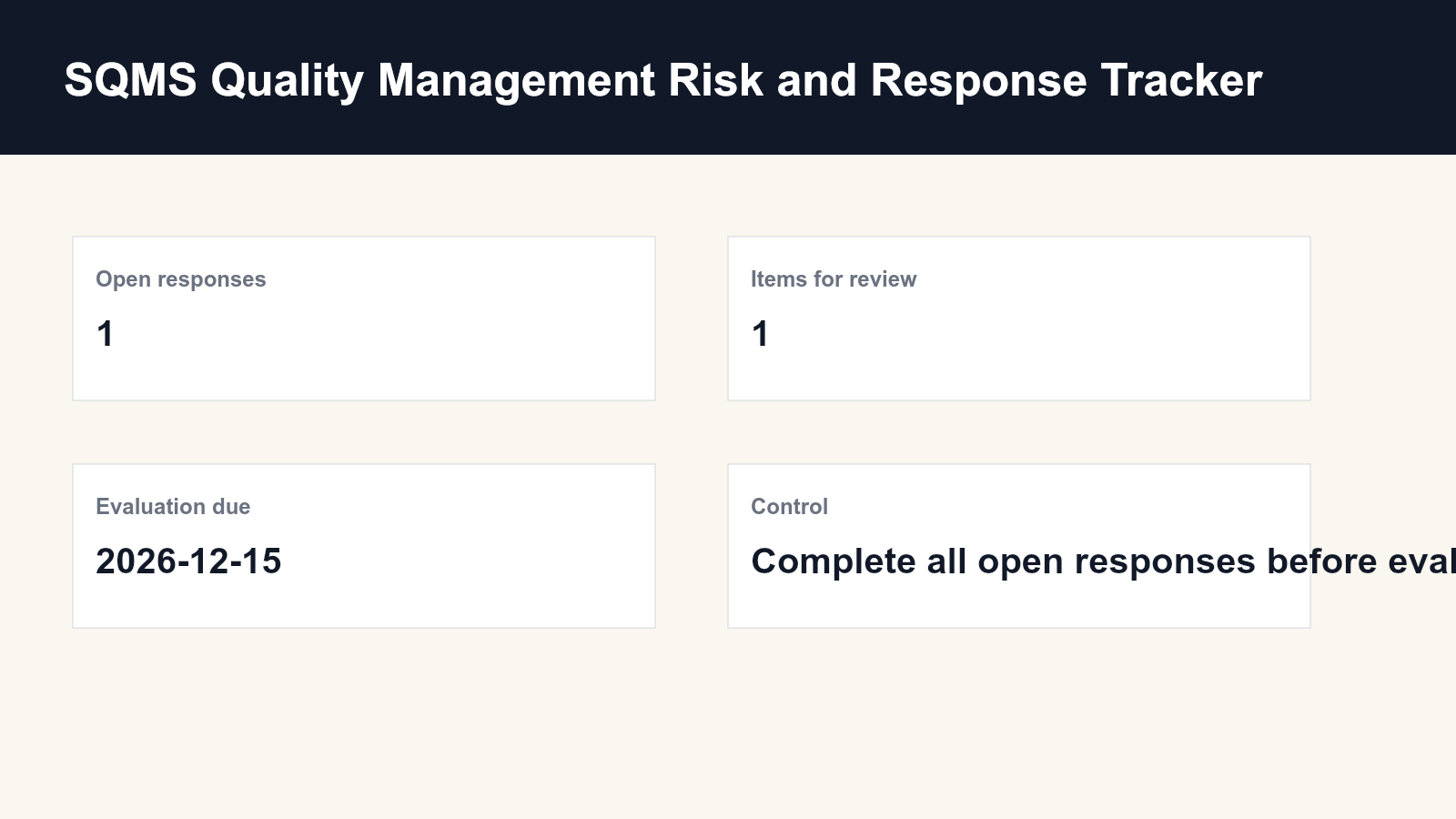
Download the SQMS Quality Management Risk and Response Tracker for a structured starting point. Pair it with the Section 7216 Outsourcing Consent and Vendor Security Tracker when outsourced preparation work is part of the firm's risk profile.
Source
Use the current AICPA standards and your firm's professional-advice process to determine the requirements that apply to your practice. This article is operational guidance, not legal or professional standards advice.