The FinBoard blog.
Playbooks, benchmarks and engineering notes on multi-entity finance — close, consolidation, FP&A and the systems behind them.

Switch payroll providers to QuickBooks before January: Tie Out Year-to-Date Pay First
QuickBooks Workforce can now import employee records and year-to-date pay history from ADP or Gusto. Before you switch payroll providers in the fourth quarter, tie the imported totals to your three filed Forms 941 and each employee's last pay stub, or wait and switch on January 1.
Florida minimum wage at $15: Re-baseline Restaurant Labor Cost and the Tip Credit Make-Up
The Florida minimum wage hit $15.00 and the tipped cash wage $11.98 on September 30, 2026. Here is how to re-baseline restaurant labor cost by location, run the weekly tip credit make-up test, and price the step before October closes.

QuickBooks service items by paycheck: Reconcile Labor Job Cost Before You Trust It
QuickBooks now tracks service items by paycheck. Here is the payroll-to-job-cost tie-out, burden policy, and month-end cutoff accrual contractors need before trusting labor cost by job.

2027 Medicare Advantage Star Ratings: A Payer Mix Review for Practice Finance
2027 Medicare Advantage Star Ratings give healthcare finance teams a reason to refresh payer-mix assumptions with contract-level evidence before changing budgets or forecasts.

October 2026 I/OCE update: Keep Suspended Claims Out of Committed Cash
Use the October 2026 I/OCE update to track suspended outpatient claims, reconcile resubmissions, and revise expected cash without automatically reversing revenue.

FY 2027 IPPS correction: Accept Revised Rate Files Before Reporting
Use the FY 2027 IPPS correction to verify payment-input versions, reprice an unchanged discharge sample, and approve hospital reporting with documented accounting controls.
FIRE to IRIS transition: Reconcile Each Client Before Cutover
Prepare for the FIRE to IRIS transition with a client-level payment reconciliation, a worked filing-population bridge, and clear ownership of transmission and corrections.

QuickBooks Muse: Test Invoice-to-Payment Before Your First Send
Test QuickBooks Muse with one customer invoice before expanding access. Verify approval, prevent duplicate billing, and reconcile the customer payment to its bank settlement.
QuickBooks Books Upkeep: Assign Posting Responsibility Before Opting In
Evaluate QuickBooks Books Upkeep with a client responsibility agreement, a duplicate-entry example and clear controls for posting, review and monthly report release.

IRS mobile app: Reconcile Tax Payments Before Closing Your Books
Use the IRS mobile app launch to reconcile tax-payment evidence, separate scheduled payments from bank withdrawals, and keep owner draws out of operating expenses.
Intuit ProPartner Accountants: Build a Firm Benefit Budget
Build an Intuit ProPartner Accountants benefit budget with client-level assumptions, a spending break-even test and controls that keep projected rewards separate from booked income.

2027 CLFS rates: Build a Laboratory Budget Bridge
Model preliminary 2027 CLFS rates by laboratory code, payer, and entity. Build a reconciled revenue bridge before approving changes to the laboratory budget.
QuickBooks Shopify inventory sync: Protect COGS at Cutover
Adopt QuickBooks Shopify inventory sync with clear posting ownership, a worked inventory reconciliation, and controls that prevent duplicate COGS at cutover.
Intuit Enterprise Suite balance sheet by dimension: A September Pilot
Pilot Intuit Enterprise Suite balance sheet by dimension with opening-balance checks, settlement tests, and a documented reconciliation before approving client reporting.
QuickBooks bulk payee edit: Verify Corrections Before Client Reporting
Use the QuickBooks bulk payee edit rollout to correct supplier attribution with a transaction register, exception review, and a before-and-after reporting check.
September 2026 Fed rate hike: Build a Loan Reset Cash Forecast
Turn the September 2026 Fed rate hike into a loan-by-loan cash forecast using contractual reset dates, a worked interest calculation, and accounting controls.
QuickBooks Custom Automations: A Control Checklist for Accounting Firms
Use this QuickBooks custom automations control checklist to pilot one recurring client workflow, verify the output, retain audit evidence, and decide when it is safe to expand.

Rev. Proc. 2026-32: Build a Construction Tax Transition Register
Use Rev. Proc. 2026-32 to prepare a construction tax transition register, check contract dates and filing evidence, and keep tax scenarios reconciled to management WIP.
2027 Medicare Same-Day Payment Proposal: Test Your Practice Exposure
Assess the 2027 Medicare same-day payment proposal with a claim-level exposure register, a worked sensitivity example, and accounting controls before approving practice budget changes.

Intuit Accountant Suite Transition: Test Before Retiring Firm Tools
Use the Intuit Accountant Suite transition to test overlapping subscriptions with a worked cost model, close-evidence checks, and clear retirement criteria.
The AI safety debate is not an accounting control framework: what CFOs need before AI touches financial reporting
An accounting control framework for AI-assisted reporting: define source evidence, repeatable calculations, reviewer duties, release authority, and stop conditions.

Construction WIP Schedule: Build It From QuickBooks
Build a construction WIP schedule from QuickBooks data, reconcile it at month-end, spot profit fade early, and keep billings tied to earned revenue.

The Big Four's AI Problem: Every Number Needs a Receipt
AI is entering finance faster than teams can verify its output. Here are five controls every AI-generated financial insight should pass.

Debt Covenant Compliance: A Controller's Monthly Testing Workflow
A practical monthly workflow for translating loan agreement definitions into controlled covenant calculations, documented headroom, downside forecasts, and a review-ready compliance certificate.
Section 163(j) Is EBITDA-Based Again: What It Means for 2026 Interest Deductions
A practical guide to modeling the restored EBITDA-based business-interest limitation and documenting the tax-provision impact.
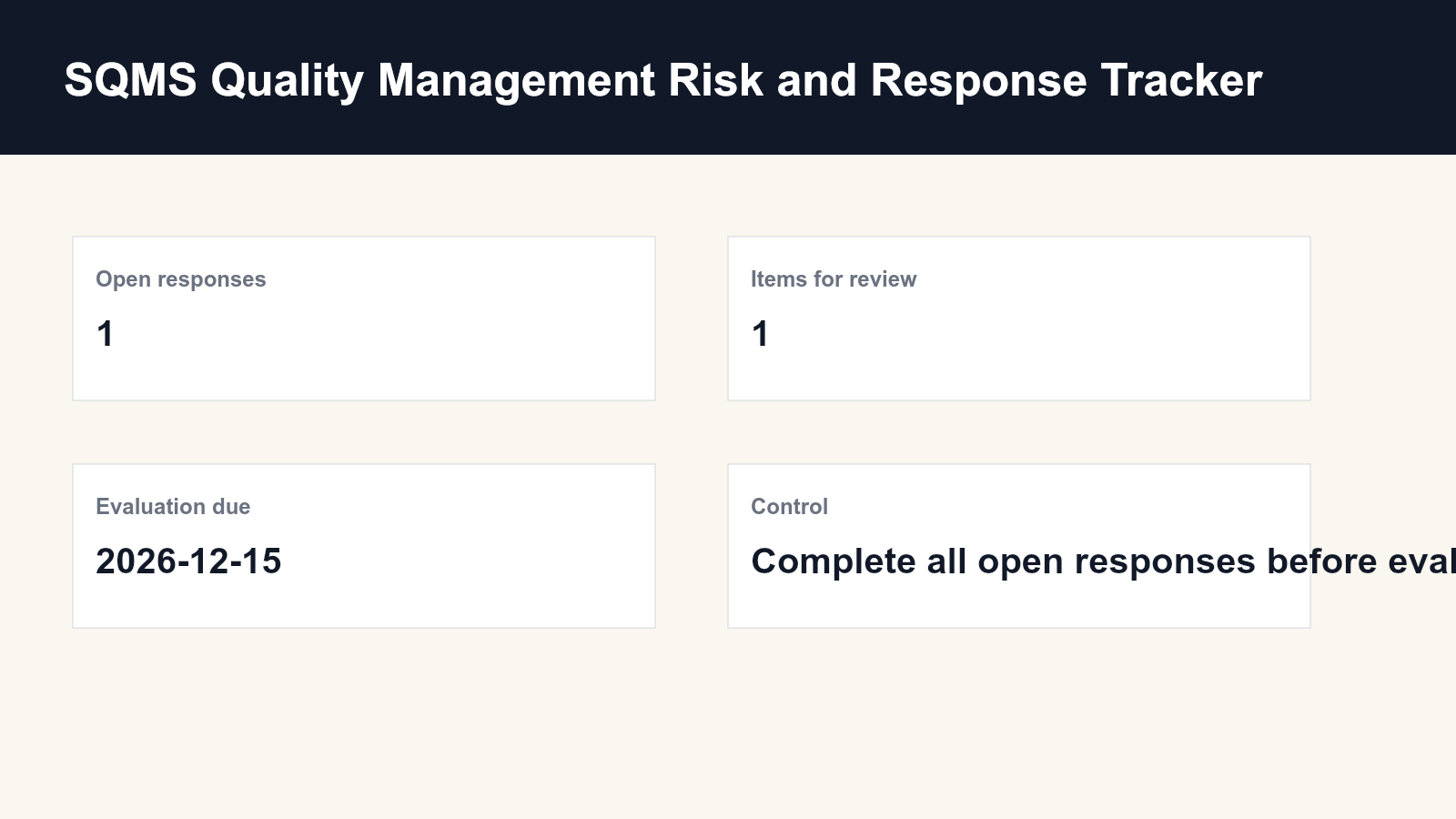
AICPA Quality Management Standards: How to Design Your 2026 Evaluation
A practical design for turning quality management from a once-a-year scramble into an owned, evidence-backed operating system.

Vendor Spend Analysis for Controllers: Find Cost Pressure Before It Hits the Close
A vendor spend review turns AP detail into a practical control for cost pressure, duplicate vendors, and unexplained category movements.

Shared Chart of Accounts Mapping for Multi-Entity Finance Teams
A shared chart of accounts can reduce consolidation friction, but only if every local account has an accountable mapping and a control for exceptions.
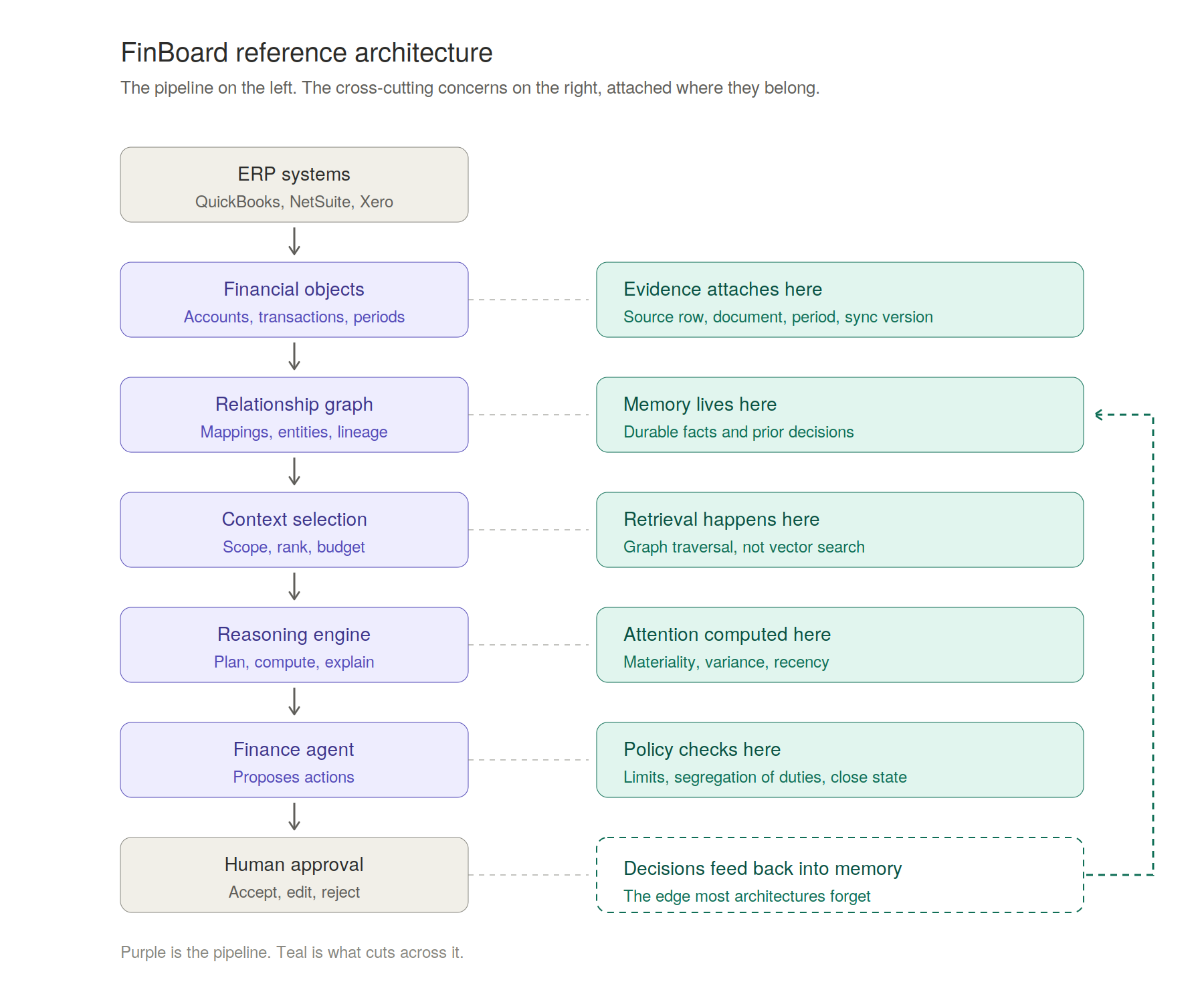
How to Design a Trustworthy AI Finance Architecture
Five design questions that turn an AI finance pipeline into an architecture that can be trusted with close-critical work.

QuickBooks Multi-Entity Reporting in 2026: What It Does and Still Misses
QuickBooks added new multi-entity reporting in 2026. Compare QBO Accountant, Intuit Enterprise Suite and FinBoard before choosing your workflow.

Five Numbers Every Small-Business Owner Should Check on Their P&L Each Month
Learn the five P&L numbers every small-business owner should review monthly, how to calculate them and which operating decisions each one should trigger.
POS Reconciliation: Getting Toast and Square Daily Sales to Match QuickBooks
Why Toast and Square deposits never match QuickBooks, the daily sales journal entry that fixes it, and the POS clearing account method.
100% Bonus Depreciation Is Back: Recording OBBBA Changes in QuickBooks Online
OBBBA made 100% bonus depreciation permanent. What changed, what to record in QuickBooks Online, and how to track book-tax differences.
Multi-Location Restaurant P&L in QuickBooks Online: Prime Cost by Location, One Consolidated View
QBO can't consolidate multi-location restaurant P&Ls. Get prime cost by location, one group view, and weekly reporting with FinBoard.ai.
FinBoard.ai vs. LiveFlow: Live QuickBooks Reporting Compared (2026)
Compare FinBoard.ai vs LiveFlow for live QuickBooks reporting in Google Sheets: sync, consolidation, AI report building, drill-down, and pricing.
How to Combine Reports from Multiple QuickBooks Online Companies: Every Method Compared
QBO can't consolidate companies natively. All four methods compared: manual Excel, Spreadsheet Sync, Desktop Enterprise, and consolidation software.
How Accounting Firms Deliver Consolidated Reports Across 50+ QuickBooks Clients (Without Spreadsheets)
How accounting firms replace spreadsheet consolidation across 50+ QuickBooks clients with automated mapping, consolidated reports, and GL drill-down.

When the Model Becomes a Commodity
The AI labs stopped competing on intelligence and started competing on price. The discounts admit what the benchmarks won't: the model itself is turning into a commodity — and the moat has moved.
How to Run a Multi-Entity Month-End Close in Under 5 Days
Most multi-entity groups take two to three weeks to close. The ones that close in five days aren't working harder — they've removed the four bottlenecks that quietly stretch every close.
Accrued expenses for month end close : A complete guide
Accrued expenses are liabilities for costs incurred but not yet invoiced or paid. US GAAP requires expenses to be recognized in the period incurred, not when cash is paid. Payroll, bonuses, interest…
Undeposited Funds accounting US GAAP
Undeposited Funds is a clearing account, not incremental cash. It represents payments received but not yet deposited into the bank. Under US GAAP (ASC 305 – Cash and Cash Equivalents, Canonical)…

Crypto Accounting under US GAAP — Complete 2026 Practical Guide
ASU 2023-08 requires qualifying crypto assets to be measured at fair value through net income . The old impairment-only intangible model is largely replaced for in-scope crypto assets. Gains and…
Hedge Accounting Principles under US GAAP — Practical Guide
Hedge accounting aligns the financial reporting of derivatives with the economic purpose of risk mitigation. Under U.S. GAAP (ASC 815), entities can apply fair value, cash flow, or net investment…

Accrued Expenses Internal Controls: A Practical Guide for QuickBooks Online Users
Accrued expenses fail at the intersection of timing, judgment, and weak documentation. Invoice receipt date does not determine expense recognition. Service period drives accrual decisions, not vendor…
Designing and Implementing Comprehensive Internal Control Procedures for Prepaid Expenses Amortization
Prepaid expenses are one of the most frequent sources of audit adjustments in QuickBooks Online environments. QuickBooks Online does not provide native prepaid amortization controls. Strong prepaid…

Designing Audit-Ready Controls Without Slowing the Close
Most accounting control failures do not come from lack of process. They come from weak enforcement. QuickBooks Online can support strong controls, but only if permissions, approvals, and evidence are…
How to Record Negative Goodwill in QuickBooks Online
Negative goodwill, or bargain purchase gain , arises when acquisition cost is less than fair value of net assets. QuickBooks Online does not provide a dedicated module for recording negative…
How Deferred Tax Accounting Actually Works Under US GAAP (With Real Examples)
A bargain purchase almost always creates deferred tax complexity. Deferred taxes are measured after fair value allocation, not before. Deferred tax liabilities often reduce or eliminate the bargain…

Purchase Price Allocation (PPA) under: US GAAP A Practical Guide for QuickBooks Online and SaaS Finance Teams
Purchase price allocation is not a valuation exercise alone; it is an accounting conclusion. Fair value drives everything, but tax, revenue, and systems decide whether it holds. Most PPA issues…

Gain on Bargain Purchase in QuickBooks Online : A Practical US GAAP Guide for Accountants, Controllers, and CFOs
Executive Summary A gain on bargain purchase is one of the most uncomfortable outcomes in acquisition accounting. It feels wrong at first glance. Management worries it looks aggressive. Auditors…

Mapping Employee and Employer Portions of Self-Funded Insurance in QuickBooks Online (US GAAP)
Self-funded insurance breaks QuickBooks Online’ default payroll logic. Employee deductions are not revenue and not expenses . Employer portions are expenses , but timing matters. Claims and employee…

CECL-Risk Framing for Employee Benefit Liabilities
Employee benefit liabilities behave like short-term credit exposure. Obligations arise before payment and require estimation. QuickBooks Online records transactions, not expected obligations.…
Benefit Liability Timing and Accruals in QuickBooks Online (US GAAP)
Payroll date, service period, and payment date are rarely the same. Under US GAAP, benefit expenses follow service period , not cash. QuickBooks Online payroll is cash-flow aware, not accrual-aware.…
Employee Benefits Accounting in QuickBooks Online (US GAAP)
Employee benefit deductions are liabilities , not expenses. Employer-paid benefits are compensation expenses , often requiring accruals. QuickBooks payroll reports are not GAAP-ready by default .…
Measuring Carbon Emissions Using QuickBooks Online Data (Without Breaking Your Books)
QuickBooks Online does not calculate carbon emissions. Carbon accounting happens through third-party apps that use QuickBooks Online data. The quality of emissions data depends entirely on accounting…

Building a Lifetime Expected Credit Loss Model Using QuickBooks Online
CECL is not about predicting defaults perfectly. It is about documenting reasonable expectations. QuickBooks Online contains the raw data needed for CECL, but not the model. Most SaaS companies…
CECL Implementation in QuickBooks Online: Practical Guide for SMBs
CECL (ASC 326) requires lifetime expected credit loss allowances for many financial assets, including trade receivables and contract assets. QuickBooks Online has no native CECL calculator. Expect to…

Navigating Crypto Accounting in QuickBooks Online: Making Fair-Value Work After ASU 2023-08
ASU 2023-08 requires fair-value crypto accounting. Build a QuickBooks Online + Google Sheets workflow with FinBoard.ai for remeasurement, journal entries, and disclosures.
Capitalising vs Expensing Software Costs in QuickBooks Online: A Practical Guide for SaaS Companies
Practical guide for SaaS teams to expense vs capitalize internal-use software costs under ASC 350-40—and operationalize an audit-ready workflow in QuickBooks Online with FinBoard.ai.

The Art of SaaS Year-End Close: Turning Chaos into Clarity with QuickBooks Online & FinBoard.ai
SaaS year-end close guide: revenue cutoff, deferred revenue, accruals, prepaids and FX revaluation—plus how FinBoard.ai streamlines QuickBooks Online.
Is Goodwill an Intangible Asset? (A Practical, CFO-Ready Overview)
Learn how goodwill is calculated in acquisitions, tested for impairment under US GAAP vs IFRS, and shaped by SaaS retention—plus FinBoard.ai automation.
7 Best Forecasting Software & Tools for 2025 - Full Guide for Finance professionals
Compare the 7 best budgeting & forecasting tools of 2025—what to look for, common pitfalls, and why FinBoard.ai is ideal for QuickBooks Online finance teams.
FinBoard.ai vs Coefficient: The Complete 2025 Comparison for Smarter Financial Reporting
Compare Coefficient vs FinBoard.ai for QuickBooks Online to Google Sheets/Excel: integrations, consolidation, templates, support, and best-fit use cases.
Line-Item Budgets: The Complete Practical Guide for Businesses
Line-item budgeting guide for SMBs: learn what it is, why it matters, how to build one (with gym/SaaS examples), avoid pitfalls, and use FinBoard or QuickBooks Online.
SaaS revenue recognition under ASC 606: when contract terms change
Revenue reallocation under ASC 606 can change SaaS revenue timing when contracts are modified—learn when to apply cumulative catch-up vs prospective treatment vs separate-contract accounting.
Top Financial Software Alternatives for Modern Finance Teams
Modern finance teams are ditching manual spreadsheets for real-time, integrated, automated tools that speed close, reduce errors, improve collaboration, and turn reporting into strategic…
FinBoard.ai vs. Vena: Which Financial Management Platform Actually Fits Your Team?
FinBoard.ai vs Vena: Compare real-time QuickBooks Online reporting, consolidation, implementation speed, planning depth, pricing, and support to choose the best platform for your finance team.
FinBoard.ai vs. Fathom: The Ultimate QuickBooks Online Reporting Showdown
Compare FinBoard.ai vs Fathom for QuickBooks Online reporting—integrations, spreadsheet sync, templates, consolidation, support, efficiency, and which fits your workflow.
Top 5 Tools for Consolidation in QuickBooks Online
QuickBooks Online consolidation guide: must-have features, decision matrix, checklist, FAQs, and tool reviews—FinBoard.ai, LiveFlow, Fathom, Jirav, Vena, Qvinci, Spotlight.
Deferred Commissions under ASC 606: A Practical Guide for Finance Teams
Deferred commissions under ASC 606: how to calculate, record, and amortize in QuickBooks Online, avoid spreadsheet errors, and streamline with FinBoard.ai.
SaaS Finance Metrics: A Practical Guide for Controllers and Accountants
Controllers and accountants can use core SaaS finance metrics (MRR/ARR/NRR, LTV, CAC, ARPU, churn) to improve planning, investor readiness, and scalable, auditable reporting.
Why QuickBooks Online cannot manage a reliable 13-Week Cash Flow Forecast (and how to fix it)
QuickBooks Online can show invoices and a cash flow chart, but it can’t turn AR into a reliable 13-week, week-by-week receipts forecast. Learn bucket-based collections, calibration, reconciliation…
Intercompany timing differences and bank-recon headaches in QuickBooks Online — diagnosis and a FinBoard playbook
Why reconciled QuickBooks Online bank accounts still break consolidated cash flow—and how to eliminate timing noise with cash-in-transit, cutoffs, and intercompany matching.
ASC 830 Intercompany FX Loans & Dividends: QuickBooks vs FinBoard
Organizations with multi-currency subsidiaries struggle with ASC 830: remeasurement, CTA, dividends, and net-investment loans. See why QuickBooks falls short and how FinBoard automates multi-tier FX…

Multi-Currency Close in QuickBooks Online: Rates, Journal Entries, and Controls under ASC 830
QuickBooks Online supports multicurrency but does not automate ASC 830 or IAS 21. Learn remeasurement vs translation, CTA posting, JE templates, and when to move to FinBoard.ai.

Consolidated Cash Flow Reporting in QuickBooks Online: The Gap No One Tells You About
Build accurate consolidated cash flow from multiple QBO entities. Learn limits, workarounds, eliminations, FX, and a reliable FinBoard.ai + Google Sheets setup.
Operating Leases in QuickBooks Online under ASC 842
Capitalize operating leases under ASC 842 in QuickBooks Online. Solve PV, JE entries, amortization, and audit challenges with FinBoard.ai.

How to capitalise finance leases in QuickBooks Online under ASC-840
Hands-on ASC-840 lease accounting in QuickBooks Online: tests, PV & amortization templates, chart of accounts, journal entries, reconciliations, audit controls, and tools like Finboard.ai.
Consolidated budget vs actuals: A guide to multi-entity budgeting
Build consolidated budget vs actual across entities in QuickBooks. Solve COA mapping, eliminations, FX, and audits. Scale faster with FinBoard.ai.

ASC 606 Revenue recognition and its struggles with QuickBooks Online
QuickBooks Online and ASC 606: why revenue recognition breaks, how to handle deferred revenue and performance obligations, and steps to reduce audit risk.
Intercompany Eliminations: A Practical Guide for Busy Finance Teams
Why intercompany eliminations matter, four practical methods with numbers, growth-stage fit, FX and balance-sheet issues, and how FinBoard.ai reduces errors and month-end hours.
Multi Entity consolidation - Gaps and how to close them
QuickBooks Online lacks native consolidation. See gaps, Excel risks, and how FinBoard.ai enables multi-entity P&L, balance sheet, cash flow, and eliminations

AI-Driven Revenue Acceleration: Lessons from Q2 2025 SaaS Filings
FinBoard.ai analyzes Q2 2025 SEC filings to show how AI drives SaaS growth, retention, and operating leverage, with actionable takeaways for founders, VCs, and analysts.
Bring every entity into one intelligent workspace.
Book a 30-minute consultation with our team. Bring your trial balance, we'll walk through a live consolidation and scope your custom application.